
When the Jigsaw Shatters

What does the in-between space of a life-altering transition actually feel like from the inside? In this post, I take you inside my own, after the death of my husband Jeff, through the image of a shattered jigsaw and a shaken snow globe. I share how the pieces slowly began to find new places, and invite you to find the image that describes yours
A couple of posts ago, in ‘Turning Toward Transition,’ I left you with a question: what does this in-between space actually feel like, day to day, on the inside?
In that post, I wrote about the liminal space, that not being anywhere: caught between the life you had and the one that hasn’t taken shape yet. The Tibetan Buddhist tradition calls it the bardo, the in-between. I suggested that simply naming it is enough of a place to begin. So let me answer the question by taking you inside one of my own life-altering transitions.
For me, the life-altering change was the death of my beloved husband of 33 years, Jeff.
Picture a jigsaw puzzle of 1,000 pieces.
A vast, intricate picture, built slowly over a lifetime. There is a central core of the puzzle which hasn’t changed much over time, surrounded by layers of other puzzle pieces that have been more transient, reflecting shifting priorities, focus and attention. Each piece has a place, and each piece connects to the ones around it.
That was my life. That was who I understood myself to be. It was my operating platform: the basis from which I navigated everyday decisions, choices and priorities.
Some of the pieces were my relationships and my values, what I stood for. Some were my roles: mother, wife, daughter, aunty, sister. Others were who we were as a couple, as parents, as a family. Still others held the plans we’d made for the months and years ahead. And some were my work: my clients, and the version of Evolving Leaders I knew.
I was always adding to the picture, refining it, rearranging a piece here and there at the edges. But the heart of it was solid and I knew where the pieces went.
Then Jeff died and the puzzle was shattered.
Not a few pieces of it. Every piece, scattered. And it wasn’t only the pieces that were obviously linked to Jeff. My identity, my relationships, my values, my priorities, my work: each had been connected to the whole, and each was thrown out of place. Even the pieces that were still mine looked strange, because they had only ever made sense as part of the picture.
And the picture on the box lid was gone. I no longer knew what I was building toward, or whether it would look anything like what came before.
My external circumstances changed forever. I was no longer a wife. We were no longer the family we had been. And as everything around me shifted, my inner world came apart with it. Nothing I knew looked familiar.
To the outside world, I looked as though I was coping. People would say things like, “Great, you’re planning a trip. You look as though you’re managing well, Nicola.” But inside, it was a different story. Only those in my innermost circle, and the professional support around me, had any idea of the messy, disorientating void within me.
In a journal entry during this time, I wrote:
“I feel like a snow globe that’s just been shaken on the inside, and all the parts of my life are free falling. Nothing feels grounded or known.”
There were many moments when I felt I might simply float away. It felt easier to just let go and float off to be with Jeff . Even with three precious daughters who needed their mother more than ever as they walked their own grief path, I felt no anchor holding me here.
I no longer related to time as I once had. Time felt elastic, irrelevant. I would have struggled to tell you what month it was, or even what year.
And running underneath it all was grief. Every liminal space carries some, but after a loss as great as a spouse’s, it is amplified. Grief can eclipse every moment. It becomes our whole reality, and there is no stepping back from it. It is the foggy lens through which we view everything.
In time, some space can open within us, and we can start to consciously attend to what the transition is asking of us. We begin to develop some capacity to turn inward: to notice our thoughts, our feelings, the sensations in our body, and to gently stay with what is happening inside us.
I recall the day it truly dawned on me that my jigsaw had been shattered. I stood looking at the scattered pieces with no picture to guide me and no idea where to begin. It was a frightening and overwhelming place to be. And so I wrote.
Reading my journal back now, I can see the liminal space in every line:
The who I was before is not the who I am now. I feel frozen in action.
When will this fog lift?
I feel intensely frustrated. Like I just want to scream out loud: ENOUGH.
And one entry I now recognise as the beginning of turning toward:
It still feels disorientating. And I’m not attending to myself. I’m not getting clearer on the questions I have and not asking for help. I’m expecting it [the movement and clarity] just to happen.
Walking was the first piece of the new jigsaw that I was shown, and I chose to move toward it.
It took up place as one of those pieces at the core and sat alongside the grief that had already made itself at home in my new puzzle. I didn’t just walk; I hiked hundreds and hundreds of kilometres across different cultures and continents. The mountains and nature held me in my grief. The grief travelled with me.
Slowly, piece by piece, the new jigsaw has begun to come together, and it continues to do so. Over time I am making more conscious choices about which pieces I would like to pick up and where they sit in my puzzle. I am also recognising which pieces no longer serve me and discarding them to make space for the new. And as I continue on the long road of integrating the loss of Jeff, I discover more pieces that fell off the table forever, no longer mine to hold. Alongside that, I have welcomed in new pieces, some of them surprising and unexpected delights. I have learned that joy and sorrow can live in the same puzzle, and that feeling one doesn’t betray the other. There are still plenty of blank pieces too, as they represent the space for more of the new that is yet to unfold.
It’s partly why I’m here now: far enough along in the unfolding of my new puzzle to share this story with you, and to begin supporting others through their own life transitions. That work has become a core piece of my new puzzle.
I’ve given you two images of mine: a shattered jigsaw and a shaken snow globe. If you have lived through your own life-altering change and the liminal space that ensues, what image would you use to describe it?
If you’re in the middle of your own shattering right now, please hear this: you don’t need to find the picture on the box lid yet. You don’t need to know where the pieces go, or which ones to keep. Naming what this feels like, in whatever image arrives for you, is enough of a place to begin.
So I’ll ask again. What image would you use to describe the inside of it? A shattered jigsaw? A shaken snow globe? Something entirely your own? Jot it down, sit with it, and notice what it tells you. If you feel moved to share it, I’d love to hear. You’re welcome to reply or leave a comment below.
Next week, I’ll offer another image for this in-between space, one that has less to do with pieces and more to do with drifting, searching for land and finding what keeps us afloat. I call it The Passage.
www.evolvingleaders.com.au
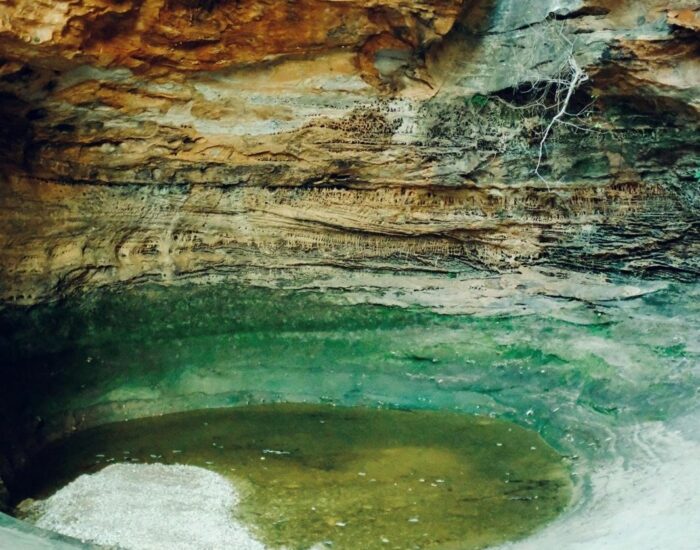
Photo: The Kimberley, Western Australia, May 2026