
People often ask what I actually do as a transition guide. This post explains how I work: who I walk alongside, what the in-between looks like, where coaching ends and therapy begins, and what it means to midwife what’s becoming
People often ask what a transition guide actually does. The honest answer is that I make room: for what has ended, for what is still unfolding, and for what is becoming.
“Transition guide” isn’t a formal title. It’s the name I’ve given to the work I do: accompanying people through the in-between. I come to it as a leadership coach with over twenty-five years of working with change, and with a grounding in art therapy and grief education that shapes how I listen.
Some of you arrive in the aftermath. The change has already happened: someone has died, a role has ended, a relationship has shifted, a version of life has closed. The ground has moved, and it keeps moving in ways you didn’t expect, as you try to find your footing in what remains.
Others arrive sensing, or knowing, that something needs to change, though it hasn’t yet. You can feel the edges of what you’ve outgrown. You come wanting support to shape what happens next: what to let go of, how to move through the loss that letting go brings, and what you’re growing towards.
Either way, you’re in the in-between, and either way there is something to be acknowledged, and something to be tended.
As a transition guide, I work as a coach, not a therapist, and that boundary matters. When everything feels raw and you’re simply trying to get through, whether that’s the first days and weeks or much longer, you deserve support that’s equipped for that: a therapist, counsellor, psychologist or your GP. That isn’t lesser care. It’s the right care for that time. Everyone’s grief journey is different, and there’s no right time to arrive. Some people come within months of a loss, others years later, and you’re welcome whenever you do. When there’s room to breathe, transition guiding can begin. If you’re not sure which kind of support you need right now, say so, and I can help point you in the right direction towards the help you need for now.
Whichever way you arrive, this is your transition, and you decide where we go. We go slowly. We don’t rush this process. So much of what surrounds us urges us to get through change quickly, to bounce back, to move on. But transition doesn’t work to a timeline, and grief doesn’t either. Instead, we attend to it gently and consciously.
That begins with turning towards what’s happening rather than away from it. If the change has already happened, we acknowledge what has ended and what has been lost, whether that’s a person, a role, a sense of certainty or a version of ourselves we thought we’d always be. And within any one loss there are often hundreds of smaller ones: the familiar voice, the shared routines, the future we’d quietly imagined, the everyday moments that no longer have a place to land. If you arrive sensing or knowing that something needs to change, we turn towards that knowing together and look at what may need to be let go of to make space for the next new beginning. Every transition carries loss, even the ones we choose, and naming those losses, large and small, is often the first moment people feel they can breathe. Then we look at it honestly: what do we know, and what is still unfolding?
As a grief educator, I bring an understanding of grief and loss, and of what they do to the mind, body and nervous system. Grief isn’t only about death. It follows any ending, including the ones we choose, and knowing that can make what you’re feeling less frightening and more human.
As a developmental coach, I bring a lens that looks beyond new skills and knowledge to how you think and see the world. Transitions often outgrow the perspectives that once served us. Through insightful questioning, I help you surface the assumptions and limiting beliefs you may not have realised you were holding, and gently challenge them, so that new possibilities can come into view. This isn’t about adding tools. It’s about expanding your capacity to meet complexity and uncertainty, so you’re not only getting through this transition but growing into someone who can hold more of what life brings.
Grief and upheaval live in the body as much as the mind: the tight chest, the knot in the stomach, the restless nights, the exhaustion that makes no sense. And sometimes the body knows that something has to change long before the mind agrees. It shows up as a quiet unease, a sense that something no longer fits. That’s why, at its heart, our time together is coaching that listens to all of you. I listen deeply, I ask the questions that help you see what’s true for you beyond the ‘noise’, and I hold the space for you to hear your own wisdom. Somatic coaching is part of how I work too. When it feels right for you, we bring the body into the conversation and listen to what it already knows. It holds so much knowing, always waiting for us to listen, and together we build your capacity to hear it.
We explore what helps you hold steady in the in-between: self-care that genuinely nourishes, and rituals that give the heart somewhere safe to rest. I witness what you’re living through and normalise it, because so much of the distress in transition comes from believing we’re doing it wrong.
And when the time is right, and not before, the space is held to begin imagining what comes next. Who are you now? How do you want your life to be? And, in time, how do you want to move forward, and what meaningful steps will take you towards what matters most to you? This isn’t about replacing what was lost or pretending it didn’t matter. For me, it meant slowly reassembling my shattered jigsaw puzzle into its next form (more on this in a future post –When the Jigsaw Shatters), bringing the love and essence of the past with me as I moved forward, so it could thread through into a new beginning. What we have loved doesn’t disappear when life changes shape. It becomes part of who we are becoming.
I think of this as midwifing what’s becoming. I don’t need to know what is emerging in you. I hold the space around it, and I help you notice the signposts as they appear, until the next shore comes into view. You hold the wisdom to find your way. You just don’t have to do it alone.
Transition guiding is not a job for me, it’s a calling, and it’s an absolute privilege to walk alongside you as you navigate the messiness of being human.
If something here feels like what you’re needing, we begin with a conversation. Thirty minutes, to see whether I’m the right guide for you and to hear what’s brought you here. If it feels right, we continue together over three or six sessions on Zoom. I have two places left to begin in 2026. If now isn’t the right time, February 2027 is there for you. You can book a time here, or drop me a line at nicola@evolvingleaders.com.au if you’d like any questions answered first.
www.evolvingleaders.com.au
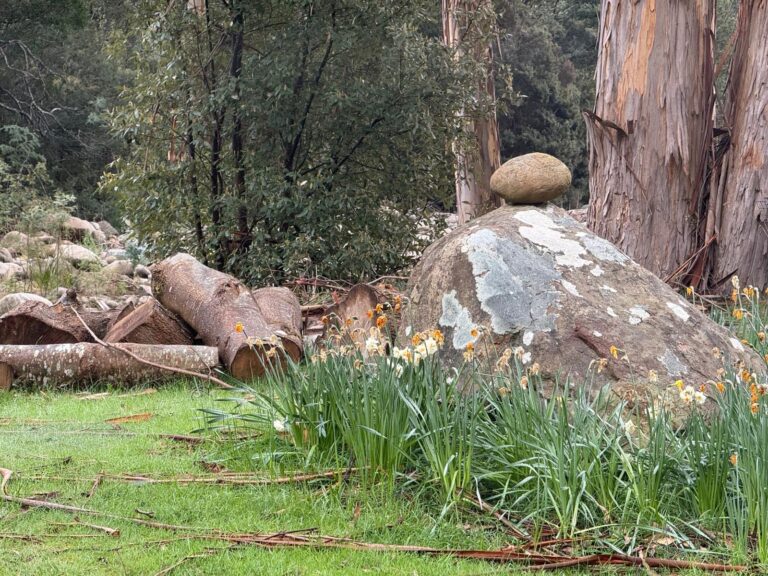
Photo: Mountain River, Tasmania Oct 2026