

This isn’t the next post I’d planned in the transition series. It arrived this morning before my first cuppa, and since I’m learning to go with the flow, I’m sharing it with you fresh. The others in the series are coming soon.
This post is about what happens beyond liminal space, when you’ve stepped onto the new shore and you’re back in the driver’s seat of life. Grief doesn’t stay behind. It comes along as a passenger, mostly quiet, until a conversation, an anniversary or a Grand Final brings the little losses rushing back. And it’s about what I’m finding alongside the pain this time: gratitude, and the lessons Jeff left us.
Yesterday I paced the chocolate aisle at the supermarket, unable to decide which one to choose, and then the tears came. Inconsolable tears. No sunglasses, no tissues. (Chocolate is very much an emotional crutch for me, so it makes sense I was standing there and not in fruit and veg.)
It caught me by surprise. I’ve been feeling stable and strong for about four months now, a far cry from the extensive period before, when I was traversing the depths of grief, lost in the liminal space. It has been such a relief to feel aliveness again, to pop up from those depths into the seeds of a new beginning.
It seems there is a distinct point when you move out of the liminal space and arrive on the new shore. That doesn’t mean everything is settled and the grief goes away. The jigsaw puzzle my life shattered into when Jeff died still has a lot of forming to do. For me, the switch came when I’d had enough time (and therapy) to integrate the loss and could begin to contemplate the possibility of living fully again. I had grown around the grief to the point where it was no longer the lens through which I experienced all of life.
Lois Tonkin’s work on growing around grief describes this well. The grief doesn’t go away. It comes with you. But as your capacity grows around it, you’re no longer held hostage by it 24/7. There’s more mental clarity, and a desire to move forward. There’s an interest in bringing the gifts from the life that’s been and in birthing a new chapter. That starts to buoy you along. For me, amongst other things it was a knowing that it was time to get back to work, it’s as though life itself pops into the driver’s seat, and grief takes its place as a passenger.
But even with grief as the passenger, it can still cry out like an upset child in the back seat and send you swerving.
Over the past few days, I’ve felt emotion surfacing and had been curious about it. The second anniversary of Jeff’s passing is fast approaching, and I’ve been present to how this might be for me this time around. Then that morning, I’d had a conversation with a friend.
Several years ago, my friend separated after a loving thirty-year marriage. The night before, for the first time, he’d gathered with his ex-wife and their three adult children for dinner, the five of them finding their new way forward as a family. The evening went well, and I was genuinely delighted for them all. It takes relationships that are sufficiently intact, and egos and self-interest stepping aside, to make that happen. Sadly, from what I’ve observed from the sidelines, it often not the case.
As he shared his experience, something landed starkly in front of me: our band will never be back together again. Being a family of musicians, we playfully called ourselves the von Vagues (as in the von Trapps), and nothing made us happier than when the band was together. Of course, I’ve known this for nearly two years, but yesterday it arrived like fresh news. While everyone is still living, there’s a choice to come back together. When one of you dies, that choice dies too. Jeff has gone and so has our family unit in that form.
I don’t regret the conversation. In fact, I’m grateful for it. It helped me attend to a micro-loss my mind hadn’t yet caught up with, and it sparked this reflection. What matters is that it’s possible for his family, and that, through choosing love, they’ve created a new ritual to come together, simply because they can. We can all learn from that.
And then there was the day itself. Yesterday was AFL Grand Final Day 2026, and Grand Final Day will always mark one of those harder days in our lives.
Jeff was an avid football follower. His big brother cultivated that love, taking him to games and talking all things Fitzroy (now the Brisbane Lions) from when he was a small boy.
In 2023, not long after we nearly lost Jeff to a severe reaction to a clinical trial drug, he miraculously made it to the Grand Final in person. It wasn’t a win for his team, but he loved every minute.
In 2024, on the last Saturday in September, my dear sister and her husband helped us bring Jeff home from palliative care for the day. It would be his last time at home. He had been slowly drifting away for weeks by then, his mind and soul beginning their journey of departing his body. I now understand this is often the way. It’s another of life’s transitions, as perfectly designed as birth: a process, not a single moment.
The Lions won that day. What stays with us most is watching Jeff muster everything he could to celebrate, when really a football match matters so little when you’re about to leave this earth. All the things that were so much a part of who you were simply fall away. His vacant expression and half-hearted wave of the flag as the siren sounded broke our already broken hearts a little more. And still, I’m so grateful we had that final day together at home as a family.
In 2025, eleven months after Jeff died and in the deepest part of my grief, I prayed the Lions would bomb out before the Grand Final. I didn’t know how we would get through reliving our 2024 experience. They made it, and they won. Jeff would have been delighted. Somehow, we navigated that difficult day, and two of our daughters even made it to the Grand Final in person, because that’s what you do: you get up and keep going.
I thought that another year down the track, yesterday’s Grand Final would be easier. But it’s amazing how our bodies know and our minds remember. Those same heart-wrenching scenes from 2024 replayed in my mind’s eye, and today I feel emotionally hungover without having touched a drop.
But something has shifted. Alongside the pain in the memories, I can now feel immense gratitude too. I’m grateful Jeff came home that last day to sit in his favourite chair with a bowl of Haigh’s chocolate caramels, hot chips and sausage rolls, as was always the way on Grand Final Day. I’m grateful for the people who held us so we could make it happen. And I’m grateful for what Jeff taught us through his courage over those 15 months.
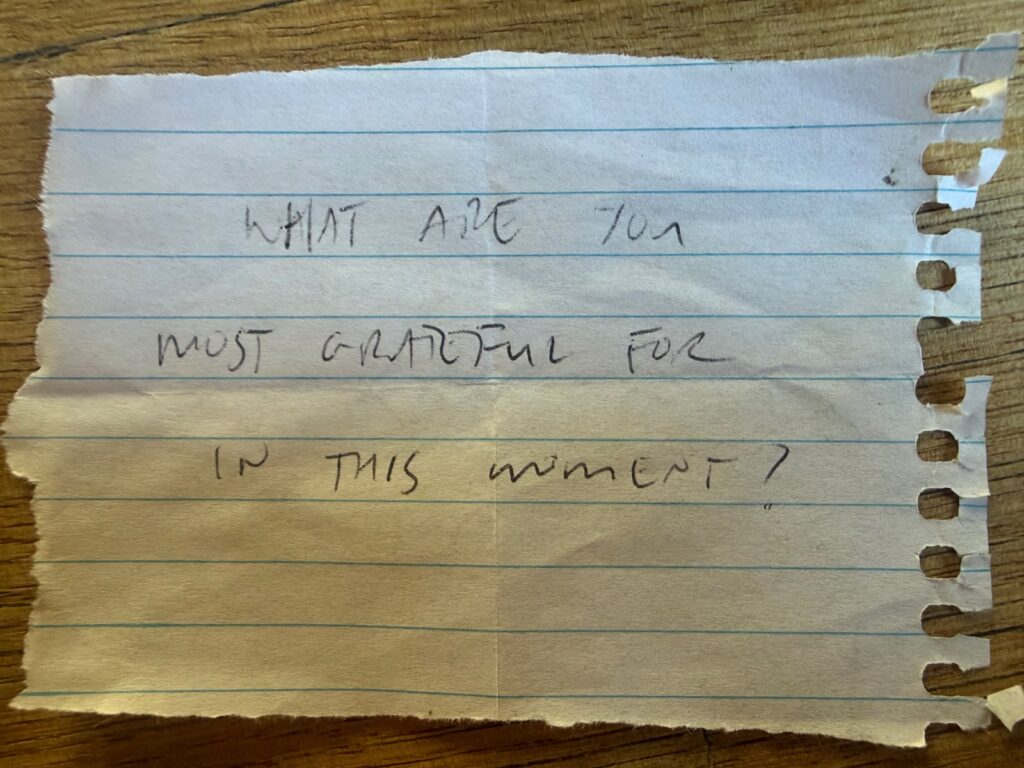
Gratitude was one of Jeff’s greatest qualities, and he never stopped expressing it. On our fridge there’s still a torn scrap of paper in his handwriting, from a family practice we started during the COVID pandemic to lift each other’s spirits. It simply asks: What are you most grateful for in this moment? Even as the effects of the brain tumour took so much of his understanding, and amid his intense suffering as he faced his own mortality, he would tell us each day that he felt loved and held, and how thankful he was. He extended that gratitude to everyone in his path, and to this day I borrow his words that he would always use to thank the cleaner, the doctor or anyone else helping him: “Thank you for your work.”
So, the tears in the chocolate aisle weren’t a step backwards. This is what grief does, even after you’ve stepped onto the new shore. As you engage with life, you’re reminded of the thousands of little losses, the things no longer possible because they ended when your person died. I recognise this will happen forever more. We grow around grief, and it comes with us. That’s the nature of loss, because that’s the nature of love.
We only feel the depth of the loss because of the depth of the love. Fortunately, love doesn’t leave when the person dies. We feel Jeff’s love with us every day. He taught us what truly matters when everything is stripped away. That wisdom guides our choices still, and it is shaping our daughters into three young women he would be so enormously proud of.
Great work from above, Jeff, helping your team to three in a row. Go Lions. They’ll be counting on you for the fourth victory next year.
We miss you more than words can ever hold. Thank you for being our teacher, for being the bass in our band, and for your eternal love. We will love you forever x
And in Jeff’s words, from our fridge to yours: what are you most grateful for in this moment?
www.evolvingleaders.com.au
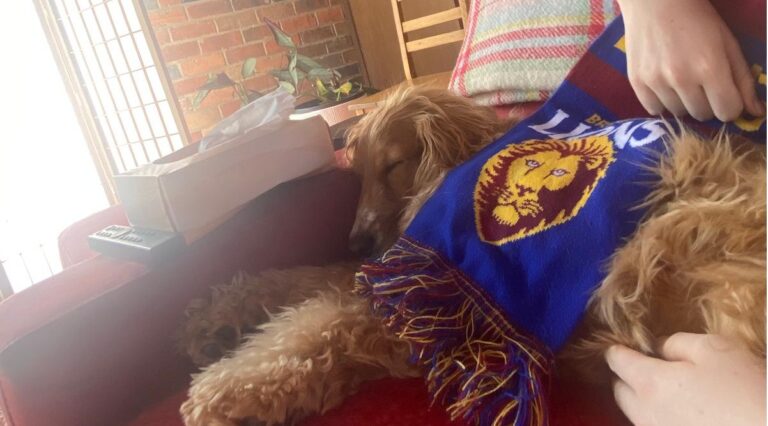
Photo: 28th September 2024. The von Vagues, Grand Final Day 2024. Jeff’s last day at home.
As humans, our tendancy is to focus the external changes in our lives, and rarely on what they ask of us inside. In this post I explore the difference between change and transition, why grief and loss are part of every transition, and why the in-between is where so much of our growth quietly happens.
Change is what happens to us. Transition is what happens within us.
I’ve spent three decades working with humans and the systems they gather in, and I’ve come to believe that much of the unsettledness we feel around change lives in the gap between those two sentences. We plan carefully for the first. We barely notice the second.
Perhaps something in your life has changed: a job ending, children leaving home, a separation, a diagnosis, or the death of someone you love. Or perhaps nothing obvious has happened, and you simply feel off, not quite yourself. There can be many reasons for that. But when the feeling follows a change or arrives with a quiet sense that who you’ve been no longer fits, it may be an internal transition asking to be noticed.
We mostly turn away from our life transitions. We ignore them, or we don’t recognise them. We rarely name or acknowledge them, and sometimes we don’t even know they’re happening. We just experience and grapple with the symptoms without understanding the cause.
This isn’t anyone’s fault. Most of us never think beyond the change itself, so the transition it asks of us goes unnoticed. It’s rarely something we consider for ourselves or support each other through. We simply have no map for it.
Transition is part of being human. So are grief and loss. And yet we were never taught how to notice or attend to either. We learn to read and write, to drive a car and to perform CPR. But when life changes, no one shows us how to grieve what we’ve lost, or how to navigate the internal experience of transition. It’s not a failing on our part. We have simply never been taught.
William Bridges, who spent his life studying how people experience change and transition, made the distinction that has shaped my work.
Change is the external event: the diagnosis, the ending, the restructure, the unexpected news. We can be the initiators of change, and we can also be the recipients of change that is desirable and change that is devastating.
Transition is the internal process we go through to integrate it. It’s the messy, disorienting, confusing, discombobulating, non-linear part that is so often brushed over. It throws us into disarray. It can leave us drifting through our days on autopilot with little to hold on to. It challenges our identity. And, well supported, it fuels our evolution and strengthens our resolve.
Change can happen in a moment. Transition takes as long as it takes.
We can let transition simply happen to us. Or we can turn towards it, listen to what it’s asking, and let that guide us forward. That is the work of transition.
From first breath to last (and beyond)
Transition begins before we even take our first breath. Perhaps the first great transition of all is the soul’s journey into physical form. From conception to embryo to human baby, we arrive carrying so much capacity and potential.
Life, by its very nature, is a series of thousands of tiny transitions. Together they map the path of our growth and evolution, all the way to our final transition for this lifetime: the end of life itself, and whatever lies beyond it.
Then there are the macro transitions. Some we consciously choose to enact, like the decision to leave a marriage or walk away from a friendship that no longer serves us. Others are inevitable at various life stages: becoming an adult, becoming a parent, losing a parent, traversing menopause, to name a few. And others are simply thrust upon us.
All of them involve grief and loss, because change always involves loss. Even the changes we choose. Even the ones we celebrate.
A map for messy territory
I said earlier that we have no map for transition. Bridges offers us one. He described transition as moving through three phases:
- The Ending. We let go of the way things were.
- The Neutral Zone. The old is gone, and the new isn’t yet ready.
- The New Beginning. New identity, energy and purpose begin to emerge.
It’s not a neat, step-by-step path. We move back and forth, and sometimes we’re in more than one phase at once. But this map helps us make sense of the psychological shifts we must make to find ourselves in our next new beginning.
The work of transition spans the whole journey. But the deepest work happens in the bridge between the old and the new: that middle place, the neutral zone. Something I and others prefer to call the liminal space.
This idea is far older than Bridges. Tibetan Buddhism has a word for it: bardo, meaning “the in-between”. It most often describes the space between an old version of us dying and a new version being reborn. The way I’ve come to understand it, the bardo is a place where there is nothing but the recollection of what was. It’s a time to draw out the essence of the joy and the wisdom from what has been, to carry that essence forward, and to prepare for who we are becoming.
I find that deeply consoling. It suggests that the in-between, the liminal space, isn’t empty. It is where we gather what matters from what’s ended, so we can bring it with us into the new that’s just beginning.
We expect endings, and we hope for new beginnings. What no one prepares us for is the in-between – liminal space. Yet, it’s where we quietly grow.
If you recognise yourself in any of this, you don’t need the words for it yet. Simply acknowledging maybe I’m in transition can be the first step in turning towards it.
So what does this in-between space actually feel like, day to day, from the inside? That’s where I’ll take you next.
www.evolvingleaders.com.au
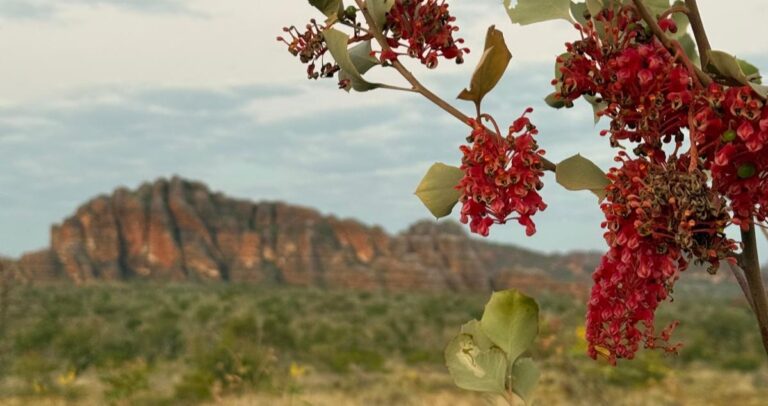
Photo: Purnalulu National Park, WA, June 2026
Building grief-literate workplaces.
Grief doesn’t wait for permission, and it doesn’t stay at home. Every year, hundreds of thousands of working-age Australians experience significant loss , and at any given time, around one in four people across an organisation may be carrying grief of some kind. They’re sitting in your meetings, answering your emails, serving your customers.
Yet most of us, leaders included, were never taught how to respond. We worry about saying the wrong thing, so we say nothing. We offer a card and a casserole, then expect business as usual. The grieving person learns to hide it, and the hidden cost shows up in wellbeing, connection, judgement, performance and turnover.
It doesn’t have to be this way. Grief literacy- knowing how to be with loss, in ourselves and others is a business issue. And workplaces that build it create cultures where people feel genuinely seen and supported through the hardest moments of their lives.
Registrations are now open for a one day Grief First Aid Training on 31 August 2026 (Public Program) where we practise exactly this: how to witness grief, and how to accompany it.
We’ll be on zoom so you can join us from anywhere!
We hope you can join us.
Grief First Aid for the Workplace Public Programs
www.evolvingleaders.com.au
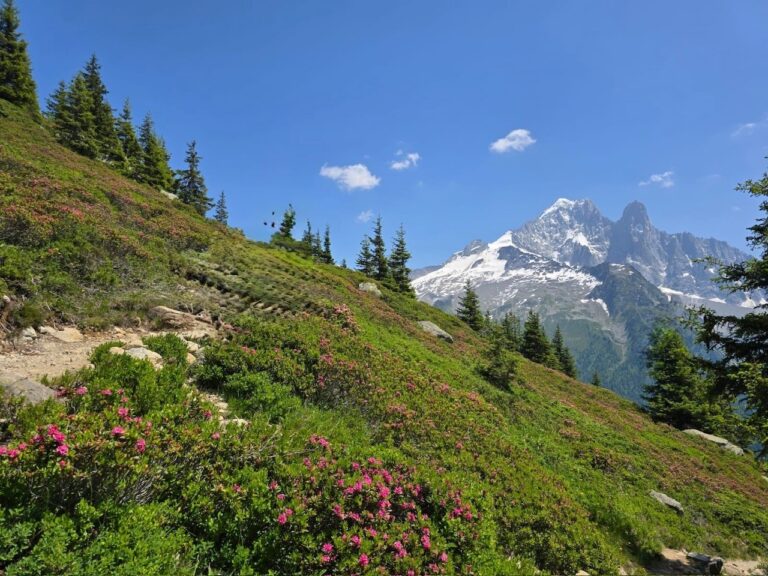
The third story from the mountains – about grief, presence, and what becomes possible when someone can hold silence without rushing to fill it.
Sometimes the most powerful thing you can offer someone who is grieving isn’t more words- it’s fewer.
In my first story from the mountains, I shared how Rita, a stranger on a bus, met me in my grief with one gentle question: What was your husband’s name? Rita’s open questions and her kind, generous nature were a teacher for us all. But that wasn’t the only way. This is David’s story.
David was our guide on the Tour du Mont Blanc- an Englishman married to a French woman, living in France for over twenty years. Guiding was more than a job for him; what he loved most was the connection that unfolds on a trail. He was around my age, and as a father and husband himself, he understood loss from that vantage point too. But it was more than shared circumstance. David had a quality of presence about him, a capacity to sit comfortably with long stretches of silence as we walked, step by step. And somehow, held in that, I found myself dropping further into the layers of grief within me, one layer softly giving way to the next.
What Rita and David shared was presence, and a willingness to hold space. What differed was what they did within that space: Rita with more words, though never a rush of them, David with fewer, and a seemingly natural ease with the tension that silence often brings.
I felt met and being met was what made it feel safe to keep going. On a trail you don’t walk side by side; you walk one ahead of the other. No eye contact, nothing to read on the other’s face, just the rhythm of our footsteps helping to hold the container, and the mountains themselves holding it too, the wildflowers emerging from winter in splendid colour all around us.
My learning was this: someone who is grieving never needs a barrage of questions. Often one is enough to open the door and then it’s about holding the silence that follows, fully present, not rushing to fill it. That discomfort you feel? It’s usually the very sign that you’re giving the person something they need.
And here’s what surprised me. As I shared more of my own story with David, it created fertile ground for him, in the days that followed, to share deeply about his own experience of life and loss too , mirroring exactly what he had offered me. I was able to be there for him, the way he had been there for me. Real conversations. Deep care, moving both ways.
I want to name something important here. Sharing your own story is not the role of a Grief First Aider in the workplace when you’re offering grief first aid, the focus stays with the person who is grieving, and turning to your own experience can pull attention away just when they need it most. But David wasn’t there as a first aider. He was giving me something different, and equally precious: the companionship of a fellow traveller who had known loss himself.
From both Rita and David, I felt witnessed and accompanied, her questions and his silence were simply different doorways into the same care.
If someone you care about is grieving, remember that you don’t need to find the perfect words. There may not be any. A walk, a silence you don’t rush to fill, a hand on the back if you’ve asked and it’s welcome, your simple willingness to stay, these can say more than any words could. Of these, the silence is the hardest. It takes courage to stay in it rather than interject and most of us aren’t wired for it. We want to fix, to soothe, to fill the gap. But that urge to rush in is often more about our own discomfort than the other person’s need.
I am so grateful to all the humans who were able to meet me on that mountain in those early months, who didn’t shy away, and who each showed up in their own unique way. This is how we integrate loss, not in isolation but through connection with others.
Never underestimate the power of simply being there.
This story is part of why I now do the work I do. Through Evolving Leaders, I guide people through life’s hardest transitions with 1:1 coaching and registrations are now open for my first public Grief First Aid for the Workplace program on 31 August, where we practise exactly this: how to witness grief, and how to accompany it.
I would love for you to be there.
www.evolvingleaders.com.au
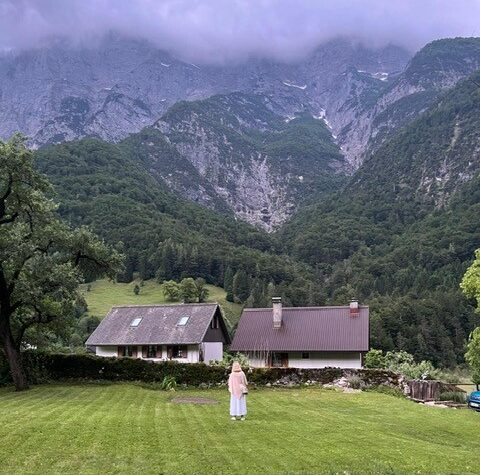
The second of three stories from the mountains – about what often happens when grief is spoken aloud, and why it isn’t unkindness.
Before I ever set foot on the Tour du Mont Blanc, there was Croatia and Slovenia.
It was the first, solo leg of nine weeks I spent in Europe in 2025, hiking my way through grief, or so I thought at the time. My husband Jeff had died the previous October. It was a real leap of faith, the courage to walk that part of my own grief path, alone. It wasn’t only the boldness of venturing out alone. It was doing so without knowing what emotional state I might find myself in from one moment to the next and, doing it without Jeff, when every holiday we’d ever taken had been together or with our family. It brought its own anxieties. (That courage, and what grief does to us on the inside, is a story for another day.)
My first contact in the country was a young Croatian man who collected me from a pre-arranged taxi pick-up. He was generous with his stories, told me about his culture, and offered to be available if I needed transport elsewhere during my stay. He reassured me how safe Croatia was, and that I had nothing to worry about as a woman travelling on her own. My anxieties quickly eased.
He had no idea I was grieving. I hadn’t told him, and he didn’t ask why I was travelling alone. He was simply being kind to a traveller.
I spent that first week touring on my own, through Split and Zagreb, before making my way to Ljubljana, where the walking would begin. Slovenia stole my heart. The mountains were like no other, exquisite, almost too beautiful to be real. In the photo above I had a full “the hills are alive with the sound of music” moment, surrounded by mountains on every side. (Wrong country, I know, but the feeling was pure Julie Andrews.)
There is a particular kind of grace in walking through beauty like that while carrying grief; the two don’t cancel each other out, they sit side by side, and somehow the landscape made room for both. I would soon learn that not everyone could.
Over the eleven days that followed which was a long time to spend in the company of the same twelve people, the conversation turned, as it does among hiking companions, to who we are and why we’ve come. Jeff’s death was so central to my story then that I couldn’t avoid it when people asked about my life and I certainly didn’t want to. Yet it was never easy to say. Each time, I felt it afresh, often keeping tears at bay as I spoke his name to someone new. And each time I shared that my husband had died, I watched something happen.
Ten people looked away.
Not cruelly. Not obviously. It was subtler than that – a change of subject, a chosen seat further down the table when the group sat down to eat, a slight increase in the distance between us on the trail the next day. The warmth that had been there a moment before quietly cooled. The landscape had made room for my grief; these fellow walkers could not.
Two, though, did.
One was a GP. The other was a nurse who was, herself, a widow. They stayed. They asked. They let me speak about Jeff, and when the tears came, they didn’t look away.
There was a flow-on effect I only noticed later. When I asked the ten about their own lives and journeys, they stayed a little guarded as though closing the door on my grief had closed something in them too. I sensed that if they let their own guard down, if they were vulnerable with me, it might invite me to be vulnerable in return and that could bring Jeff’s death back into the room, the very thing they were trying to avoid. So, they kept themselves at a distance, and in doing so kept me there too. But the two who could meet me shared just as openly in return, about their own lives and losses. Real connection formed. It turns out that meeting someone in their grief doesn’t only help the griever; it can be powerful medicine for deepening human connection.
The ten who looked away were not unkind people. They were ten people with their own stories, their own lives, their own hearts and minds – each carrying who knows what themselves. I had already met that same ordinary human warmth in a taxi driver in Split, from a stranger who knew nothing about me. That warmth exists in almost everyone, or that’s how I choose to see people, anyway. It can however simply stop at the edge of grief because grief is the one thing most of us have never been taught how to meet, let alone hold.
When someone tells you they’ve lost a person they love and you have no idea what to say, the fear of getting it wrong can be overwhelming. So, people change the subject, thinking they are protecting you but really it is their own fear at work, and a quiet belief that saying the wrong thing is worse than saying nothing at all. They can avoid mentioning your loss so as not to remind you as though your grief were somewhere in the background and mentioning it would be what brings it forward again. They give you the space they imagine you want, and what you actually receive is isolation stacked on top of loss.
Grief can only be integrated through connection, never in isolation.
And the two who could stay? Look at who they were. Both had been trained by their work to sit with people at the hardest moments of their lives – one a GP, the other a nurse. And the nurse had been trained twice over: she knew the loss of a husband herself.
And here is the part worth pausing on – in a group of twelve, over eleven days, only two could meet grief with any ease and both had been trained to, one by her work, the other by her work and her own loss.
It should not take a medical career or a bereavement of your own to know how to be present with someone who is grieving.
This is what I mean when I say we live in a grief-illiterate world. Not unkind. Illiterate, untaught.
What I saw on that trip, I now see everywhere. It plays out every day in workplaces and communities.
Grief First Aid training points to a striking figure: on any given day, around one in four people in Australian workplaces is carrying grief or loss of some kind. Yet when a grieving colleague returns, whether from a death, a diagnosis, a separation, or any of the countless losses being human can bring, even those who deeply care might find themselves avoiding the desk, the topic, the name of whoever or whatever has been lost. And so, the griever carries it alone, unspoken, through the working day.
The good news is that grief literacy can be taught. These two kind humans didn’t get there overnight, one had years in medicine, the other had her own loss alongside it. I’m not claiming Grief First Aid training hands you that. What it does teach is the starting point: how to stay, how to ask, how to not look away. That’s the part most of us were never shown and it’s the part that makes the difference between someone carrying grief alone, and someone who isn’t.
_________________________________________________________________________________
I kept walking. And a few weeks later, on another mountain, a stranger at a bus stop asked me my husband’s name.
The final story from the mountains is coming soon.
This is why I now do the work I do. Through Evolving Leaders, I guide people through life’s hardest transitions with 1:1 coaching, and Grief First Aid education for workplaces is now available so that meeting grief well becomes something we all know how to do, not a matter of luck. My first public Grief First Aider program is starting soon and bookings are now open to bring Grief First Aid training into your workplace starting in a few weeks.
I would love for you to be there. You can find out more here, lets talk or drop me an email nicola@evolvingleaders.com.au
Photo: Nicola in Slovenia June 2025 having a ‘hills are alive moment’ after a special dinner when we were invited out the back of the restaurant to find oursleves fully immersed in mountains on all sides
www.evolvingleaders.com.au
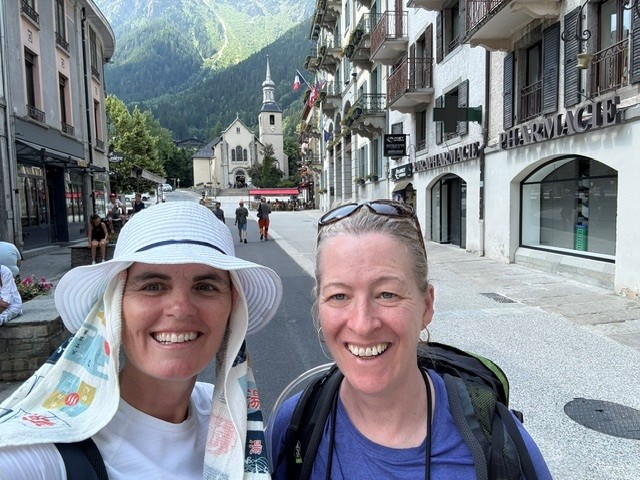
The first of three stories from the mountains about grief, loss, and what it means to truly meet someone in theirs.
Never underestimate the powerful impact you can have on someone who is grieving simply by being curious and asking a few gentle questions.
I want to share a personal story.
After my husband of 33 years died in October 2024, I took my hiking to a whole new level — a level I never thought I was capable of. It was a grief response: nothing else made sense in those months, but putting one foot in front of the other did. Alongside many hikes here in Australia, I was fortunate enough to travel to Europe to hike the Tour du Mont Blanc.
As I sat waiting for the bus transfer from Geneva to Chamonix, I started talking with the woman next to me. It turned out that she and her partner would be my walking companions on the very same trip. Rita asked why I was travelling on my own. I immediately dissolved into tears and shared that my husband had died seven months earlier.
Rather than turn away or shift to another topic, Rita stayed right there with me. She asked:
“What was your husband’s name?”
I was taken aback. Here was a complete stranger who cared enough not to shy away from my pain, but was prepared to witness me in my grief. Rita continued with other questions about Jeff’s life.
Over the next seven days, as we traversed massive elevations amid awe-inspiring, iconic scenery, held by those incredible mountains, Rita would find moments to ask me more about Jeff. She kept referring to him by his name.
And as we navigated our final descent, she looked at me and said, “Nicola, Jeff would be so proud of you.”
Rita, without even knowing it, was a natural Grief First Aider.
She didn’t try to fix me or rescue me. She offered genuine compassion, care, concern and interest. She asked gentle, curious questions that invited me to speak about who Jeff was. She validated my feelings and reflected them back to me. I felt actively attended to.
And Rita’s care didn’t end at the mountains — she followed up more than once after the walk finished and I had returned home.
Rita wasn’t the only one who held me on that mountain — but that’s a story for another post.
Rita became my teacher as well as a caring human. I have continued to pay this forward to others, and I can tell you the reaction is often the same: people are initially a little taken aback — and then they quickly soften and open, knowing it is safe to talk about their loved one.
Never underestimate the impact you can have by meeting someone in their grief. If you ever find yourself in that moment of not knowing what to do or say, I hope Rita’s story will give you a place to start.
This story is why I now do the work I do. Through Evolving Leaders, I guide people through life’s hardest transitions with 1:1 coaching, and deliver Grief First Aid education for workplaces — helping people learn to meet grief the way Rita met mine. If either of these speaks to you, I’d love to hear from you: nicola@evolvingleaders.com.au
The second story from the mountains is coming soon.
Photo: Nicola and Rita in Chamonix at the end of the Tour Du Mont Blanc hike about to have a celebratory drink!
www.evolvingleaders.com.au
The generous response to ‘Coming back, changed‘ touched me deeply. I am grateful for your caring words and gentle encouragement to get on with this important work. Thank you.
In the three weeks since, I’ve been walking through the Kimberley, where every sunrise and sunset seemed to bring a new colour and new experience, and the landscape quietly got under my skin. I’ve returned home refreshed, inspired, and ready.
So today, I begin.
While I was caring for my husband, I undertook a Diploma of Developmental Coaching through the Vertical Development Institute. If you don’t know Alis Anagnostakis’s work yet, do yourself a favour and check it out. It sharpened my coaching practice, and it’s deepened how I work in ways I’m still discovering. While I have been coaching leaders for many years, to attain my ICF accreditation on the other side of this diploma, I need to complete 100 hours of coaching practice. This is a milestone I want to approach very intentionally.
So, as I refocus my coaching offering into guiding people through transitions, I’m bringing the two together: deepening my own practice and attaining my ICF accreditation while walking alongside you through yours. I’d love for you to be part of it. And I’d like to mark the beginning with something:
Book a “Let’s Talk” conversation in July to receive 50% off 1:1 Transition Guidance & Coaching (6 session package).
Every engagement begins with a no-pressure Let’s Talk conversation, so we can explore what you’re navigating and whether this is the right fit.
You can book yours here.
If you’re in the messy middle of a transition, or you know someone who is, I’d welcome a conversation.
With warmth and gratitude,
Nicola x
Nicola Vague is a leadership coach and transition guide, and the founder of Evolving Leaders. She walks alongside leaders navigating unexpected life events, and helps organisations support their people through the line-in-the-sand moments that turn life upside down.
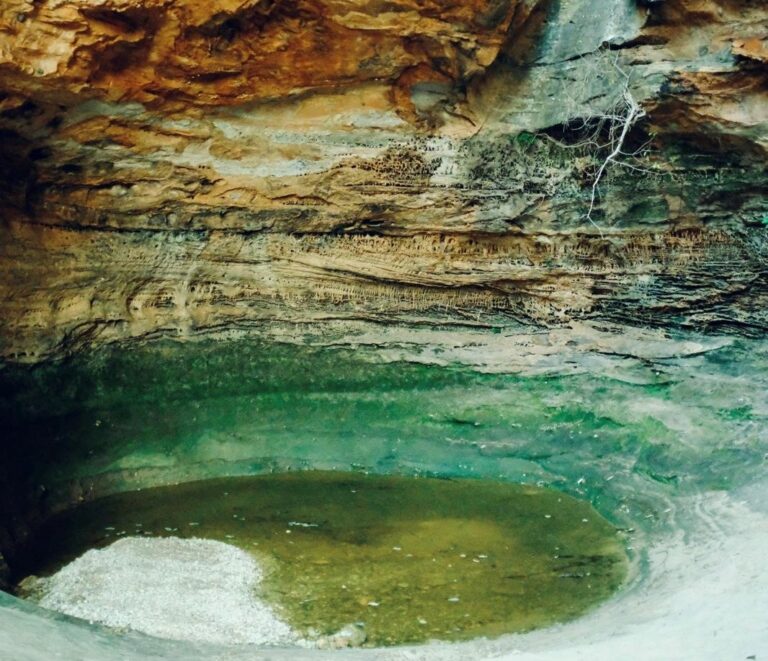
Photo credit: Martin from my Intrepid tour, July 2026. Indigenous birthing pool (no longer used, photographed with permission of a local Elder), Purnululu National Park, The Kimberley, Western Australia
www.evolvingleaders.com.au