
This post explores compassion and self-compassion through a personal story and invites the reader to reflect on their own levels of self-compassion based in the work of Kristin Neff.
Late last year I had a call from my daughter’s teacher. Chiara (age 15) was midway through a nine-week personal leadership experience based at Snowy River Campus in East Gippsland (provided by the Victorian government’s School for Student Leadership initiative).
The teacher shared with me the wonderful level of commitment, enthusiasm, goal achieving and social contribution that Chiara was making. When I asked her what she saw as the greatest development area for Chiara, she replied without hesitation in two simple words: greater self-compassion.
While this was not a surprise to me to hear someone else – with an opinion that I valued – reflect this back to me, I had a sinking feeling in my heart.
Instantly feeling ‘at fault’ as a mother (as we mothers can do so masterfully), I found myself thinking about the role model that I had been and still was for my daughter. I started wondering why it is often the case that those people who are the most kind and compassionate and loving to others find it hard to provide this same nourishment and nurturing for themselves?
It also got me thinking about the drivers that can contribute to this way of being. There’s the personal focus on external measures of success that are driven by an internal tendency to not feel good enough or worthy enough. These measures often create a false or short-lived sense of success. There are things that society values and that get rewarded in school, in the community and at home – being a ‘good girl’ and looking out for others, for instance. There are those things that take us away from feeling worthy of loving ourselves in the same way that we intrinsically offer love to the people in our lives.
‘Self-compassion is a measurable trait. In 2003 no-one had defined or measured it. In 2017 there were 1340 studies on self-compassion. Self-compassion is strongly linked to wellbeing.’ [ Source: Neff 2018
What is it to be compassionate?
Meet Chiara. Chiara is a gentle, kind and compassionate teenager who is wise beyond her years. She has natural care and concern for all living things – people, pets, trees. She takes great care in rescuing the spider or bug from her bedroom and returning it to the natural environment. She is empathic – she knows how others are feeling. She’s the kid who’ll notice the person in the corner who’s been excluded and approach them to make them feel not alone. She is the granddaughter who asks her nana from a place of genuine interest, ‘How are you Nanna? What’s been happening in your day?’, instead of a typical teenage response of a one-way street and it being all about her. She’s the first to make you a cup of tea if she senses you are out of sorts or need a bit of love.
Chiara is the kid who takes time morning and night to sit on the ground with the dog and give her some real care and attention. Each morning she appears at your side just like a pussy cat and wraps you in a blanket of love to start your day. Yes, we are truly blessed to have her in our lives.
So you see? She is actually one of the most compassionate people I know and such a great teacher to me and to her sisters and peers. Compassion is the essence of this young lady. She knows it well.
Turning this compassion that she knows so well into watering and nourishing herself – that would appear to be the next step in her learning journey. And I know she is not alone. I for one need to turn up this dial on self-compassion. Perhaps you do too?
This might help:
In the later part of 2018, I attended a workshop with Kristin Neff, a world expert on self-compassion. Part of what she offered was a radical shift to ‘relate to self’ in new ways.
Kristen defines self-compassion as:
- being a good friend to yourself
- treating yourself the way you would treat a good friend; and
- holding pain with love.
She took us through a three-part reflective process, which I would like to offer you here:
Part 1
Allow a friend to arise in your mind’s eye. Allow a close friend who is suffering in some way to appear in your mind’s eye, in a situation where you are feeling resilient and strong.
Close your eyes and ask yourself this question: How would I treat this close friend?
What are the types of things you would say to your friend?
What tone do you use?
What’s your body posture like?
What type of non-verbal gestures do you use?
Part 2
Allow to arise in your mind’s eye a situation where you failed at something important to you or you are having a hard time.
What do you say to yourself when you are struggling?
How did you say it?
What is your body posture?
How do you relate to yourself when you are struggling?
Part 3
Do you notice any patterns of difference between how you treat yourself when struggling and how you treat others when they are?
What did you discover about how you treat yourself/others?
Perhaps you might like to share your reflection with a friend?
In our work with leaders – amidst the harsh demands of work and life, the absence of self-compassion is palpable. In our quest to be better, do better, earn more, get the promotion, any notion of self-compassion gets lost.
I invite you to explore the wonderful books and resources that are available on Kristin’s website.
Is there one small step you can take toward greater self-compassion?
PS. Chiara is now several months back from her life-changing leadership experience. The young lady we have here with us now is more confident, self-empowered and self-aware than I thought was possible in such a short space of time. She’s made decisions and choices this year to show more self-compassion and of her own accord has continued a daily journaling practice. She’s followed her inner-knowing and desire to do things that bring her joy (she practices yoga several times a week, walks the dog regularly and is playing netball for the first time). She is also a daily reminder to me that I have a choice.

This post explores a holistic approach taken in my coaching of a senior leader. Our aim was to help get her out of her head and into her body, accessing and stepping into more of who she was at her core. This would provide the power, confidence and presence to deliver a significant career milestone presentation. It offers the reader resources and an approach to inspire a sharpening of your own presentation skills.
I recently worked with an executive in the latter part of her career. She was naturally introverted and had little experience in formal presentations. However, she had been charged with the responsibility of delivering a significant presentation to an internal audience, part of the launch of an exciting new chapter in the business. She felt little connection to the topic and, to make the situation a little more challenging, the parent company had provided the presentation they wanted delivered. Worse still, the presentation had been translated (poorly) from another language.
The situation triggered a fear reaction in the leader driven by a low level of belief in herself. This was exacerbated by it being a new experience and the fact that, being introverted, she quite naturally felt very visible and exposed. On the plus side the leader did something that many shy away from – she recognised that she needed help and she took personal responsibility to hire a coach to help. These are the leaders I love to support.
“While many of us might fear public speaking even just at a work morning tea, stepping up to the job can make or break your career, especially for those at the top”
Dr Lucinda Holdforth on the ABC Radio National program This Working Life.
I have done my share of presenting over the years, but to be completely transparent I had never formally coached someone else in presentation skills. So, it was time to get to work!
I reflected on the number of presentations that I had sat through feeling totally bored, with speakers who were disconnected from their message and themselves. I knew that to effectively deliver a presentation requires the development of some specific communication and presentation skills such as tone, timbre, presence and connecting with audience. I also knew that to focus on skill and capability alone was not going to deliver results.
I came across a great resource that also informed my approach:
Top Five Tips for Presenting with Impact by Dr Barry O’Sullivan
So, with an eager student at the helm, I designed a coaching program based on what I had read and what I know best: starting close in – helping this leader to deepen /reconnect with who she was and what mattered to her:
Step 1: Start close in
In this context this meant helping the leader to connect to who she is and what matters to her to enable a connection between message and person. Prior to the first coaching session this leader completed a Personal Values Assessment and Core Motivation exercise (“I go to work each day at … so that I can…”) connecting her with her deeper inner motivation: what makes her get out of bed each day to come to work. She also did some reflection around these key questions:
- What is important personally in your life?
- How do you want to ‘show up’ as a leader?
- What patterns of thinking and beliefs are getting in the way of this?
- What needs to shift so that you can feel empowered and confident as a speaker?
Step 2: Understand your audience
Often inexperienced presenters become so consumed with navigating their own fear about the presentation that they lose sight of why they are doing the presentation and who they are doing it for.
This requires a deliberate mindset shift that can feel a bit disorienting, but at the same time it can be screamingly obvious as it was for this client:
- What if it (the presentation) is not about you?
- Consider:
- How can you be of service to this audience?
- How do you want the audience to feel?
- What does the audience need from you?
- What do you need to do/what needs to change for you to get out of the way of yourself?
Step 3: Change your body, change your mind
Of great relevance for this client was the work of social psychologist Amy Cuddy on body language. Given the client was quiet by nature and didn’t easily or naturally command attention and respect when she walked into a room, and nor did she feel confident and empowered when she stood before a group, we focussed on this wisdom from Amy Cuddy:
Our bodies change our minds
Our minds change our behaviour
Our behaviour changes our outcomes
Body language affects how others see us, but it may also change how we see ourselves. Amy Cuddy argues that ‘power posing’ – standing in a posture of confidence, even when we don’t feel confident – can boost feelings of confidence and might have an impact on our chances for success.
Here is what Cuddy says:
- When you pretend to be powerful, you are more likely to actually feel powerful
- Power posing or high power poses versus low power poses – are you collapsing or taking up space?
- Do you feel like you are supposed to be here (‘imposter syndrome’)?
- You can choose to be assertive, confident and powerful
- Configure your brain to cope the best in that situation
Source: Your body language shapes who you are, Amy Cuddy
Well can I just say – in case you had any doubts – that it really works.
When you pretend to be powerful, you are more likely to actually feel powerful.
Why don’t you try it on?
It was through this inspiration, and practice that my client shifted from being closed down and reserved to having an open heart, feet on the ground, back tall and the presence that demanded attention and an excited anticipation from the audience about what she was about to say.
Step 4: Communication and presentation skills development
In terms of building the presentation skill development component of my program, I drew upon the following great ideas from Julian Treasure:
How to speak so people want to listen, Julian Treasure
There are three main parts to Julian’s work that all informed the coaching approach:
- “Amazing
Toolbox”
- Register – head, throat, chest voice – “we associate depth with power”
- Timbre – rich warm smooth
- Prosody – avoid monotony
- Silence – find opportunities to rest in silence
- Pitch – vary the pitch
- Volume – vary the volume
- HAIL – honesty/authenticity/integrity/love
- Vocal warm ups.
(You can access this content via the TED talks link above)
Step 5: Mindfulness to quieten the ‘monkey mind’
When the stakes are high and we are well out of our comfort zone there seems to be this natural increase in mental chatter – like the radio gets turned up to 10! This was the case for this leader and so through the four-week program and on the morning of the presentation, she used a meditation practice to quieten down this mental chatter.
Step 6: Practice, practice, practice
Nothing great is ever achieved without practice. This client was completely motivated and disciplined and these were key ingredients to her ultimate success. During the month-long preparation, the leader videoed herself presenting on a weekly basis, watching it back and reflecting on what had improved and areas for next focus. From my perspective, one of the big things I needed to do was to help her ‘take the jump’ from speaker notes on PowerPoint to cards to that final leap of faith that she didn’t need any prompts to finally getting out there and doing a great job.
The big day finally arrived. The message I received immediately after the presentation said: “I nailed it”. Job done. This leader was a true inspiration and a joy to coach.
It is a well-known phenomenon that we teach what we need to learn. After initially hesitating to accept this assignment, I am grateful that I said yes because as it turns out the coaching and support that I was able to give this leader was just what was needed, and ironically, as I step more into presenting and speaking myself, it was also perhaps the perfect medicine for me.
Interested in presenting with greater impact? I would love to help.
In my previous post, I explored the seven circles and invited you to consider who is in your first circle and whether it is time for an overhaul. In this post, I want to share with you my personal experience of finding my tribe and offer some tips for finding your own tribe.
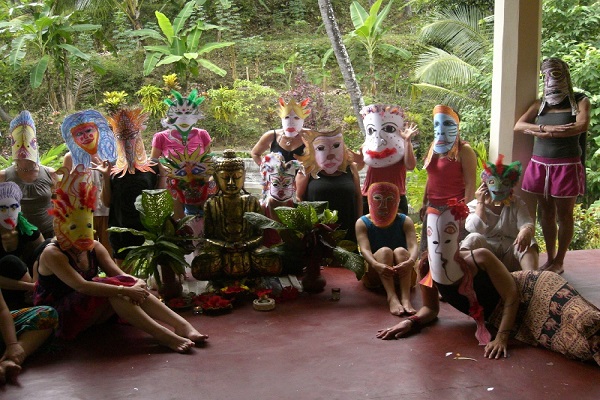
In 2012 on the far side of Bali, without a single traffic light or ATM, I arrived in a place called Tejakula and both a mountain retreat and beachside delight for every part of my senses. I had made a decision to take time away from my family and to travel alone – my first time for both – to attend a week-long art therapy conference with 24 others.
I settled into my accommodation on the beach along with four other women. Apart from two sisters, none of us knew each other. From there we travelled via motor bike to the main road and then up to the top of the mountain in a ute where the retreat was being held. This was to be our twice daily ritual: from the ocean to the mountain, from the mountain to the ocean. The five of us instantly found an incredible bond, soon feeling like friends who had known each other for years.
On the morning of the first session, I felt emotion rising as we approached the mountain top destination. I found myself in an open-air studio in this healing oasis sitting next to the bronze statue of Buddha. Tears of sadness and joy ran down my face.
In that moment and for the rich days that followed I was struck by the realisation that I was here amongst my tribe. I had never known such a feeling of belonging. In fact the whole idea of ‘tribe’ was something I had never even thought about. The fact that I didn’t have a tribe or that I needed to find a tribe had never occurred to me. There I was with a group of 25 strangers feeling more at home, and more seen and validated, than I had ever known.
Amongst this experience of pure sensory delight, experiencing the local rituals and art process, something within me was awakened. This was one of those times in life where I turned a little more towards who I am at the core.
I am so grateful I backed myself enough to take that trip.
This experience quickly set a fire in me, leaving me with a very clear intention before I left Bali: to find my tribe at home that worked in the same professional arena as me – the leadership development space.
I didn’t have to wait too long. Within a week of returning home, I met two of my now closest friends and confidantes via an introduction from a mutual friend. They are very much tribe and we are that for each other.
Over subsequent years I have been very fortunate that this tribe has grown. In terms of the seven circles, that has meant that many of my older friendships, based on outdated versions of me, moved out a circle or two while remaining important in my life.
Having a tribe, my tribe, has helped me learn to express, to connect deeply and to be present for another. In those inevitable hours and days and weeks when I feel overwhelmed (as a highly sensitive person often does – it is a shadow of this trait) or I’ve lost my way, its my tribe that help me remember who I am. Through being able to express and share even the most intimate or terrifying thoughts and feelings, I have been able to heal, to grow and to become a more useful version of me.
I share this story in the hope that it might make a difference to one person, in the choices they make and intentions they set around the people they include in their first circle.
I recognise that having a tribe is not something that everyone yearns for, and if you feel your needs are well met in the first circle just as they are, then that is of course perfectly fine for you (and I hope you have enjoyed reading this little travel blog)
If you do however have an inner yearning to grow or start your tribe, here are some tips that might be useful for you:
- There is a tribe out there for every single one of us but it’s not likely to come and tap you on the shoulder! So set your intention and take action towards finding your tribe.
- Consider people in your life who you think you might like to ‘test’ inviting into the first circle and create opportunities where you can be on your own with this person and ‘put a bit of skin in the game’. This means offering up something personal (a little bit edgy, but not so much that it will make you feel too vulnerable) that you wouldn’t usually share with this person and see where the conversation goes. It’s a bit like putting your foot in the water to test the temperature.
- Sometimes we have to ‘look outside’ our current friends, family and social networks to find our tribe. At least that was my experience – it may not be yours. The best way of doing this is to put yourself into new situations doing something that you love to do (maybe an art class, a wine club, a personal development experience, etc).
- Become a better version of your own tribe – seek out opportunities to learn and grow and develop and reflect and express and write. You could use our to set you on your way with this. This is about becoming a better friend for yourself.
- Perhaps you are a highly sensitive person like me? If you think you might be but you’re not sure, take the HSP test and if that leans you towards a yes or a strong yes, please send me an email. We have a number of ‘HSP in Business’ specific events in Melbourne where you can seek out and connect with other HSPs.
And finally, a closing note of acknowledgement for my tribe:
To my tribe. You know exactly who you are. This is for you.
Thank you from the core of my being for teaching me how:
To be present, by being present,
To listen deeply, by listening deeply,
Not to judge, by never judging,
Not to blame, by never blaming,
To welcome all of our human gifts and imperfections, by welcoming all of my human gifts and imperfections,
To lovingly hold the space for another, by lovingly holding the space for me.
You are the wind beneath my wings, and the light that shines so brightly even in the darkest moments.
I am so deeply grateful that we found each other, and I feel so blessed to be walking this path with you.
With deep gratitude, Nicola x

This post is about an idea called ‘The Circles’ from a little book by the same name. It invites the reader to reflect on the people they place in their first circle and to make a conscious choice about whether that’s working well or might need a some change.
I stumbled across a little book collecting dust on my daughter’s bookshelf. It’s called The Circles and was written by well-known Australian actor Kerry Armstrong. The purpose of the book is to help the reader to take a helicopter view of their feelings towards friends, family and colleagues and to map them to one of seven concentric circles.
I’ve found the book helpful as a ‘check in’ for myself, and I thought it may be useful for you too – particularly as we enter a time of the year when, hopefully, most of us will find some time for reflection.
Each of the seven circles in the book represents where people are in your life and your relationships to them. The first circle is for those people who make you feel good about yourself, while the seventh circle is for the people you find most challenging. The author is quick to mention that who you place in each circle is entirely up to you, and that it’s important for you to know that this will change – and that you can choose to make changes at any time.
In this post I want to focus on the first circle.

The author explains that the first circle, the one right in the middle, is where you get to express all your hopes, dreams and thoughts. She invites you to put yourself in the centre of that circle and ask yourself:
Who knows me here?
Who can I trust with my life, my thoughts, my dreams?
Who makes me feel free to be myself?
In other words, who would you have inside that first circle with you?
Perhaps you might like to take a moment to do that for yourself? What do you notice?
The Circles got me thinking about and truly appreciating the people who are in my first circle. It also got me reflecting back to a time in my life when I didn’t even know that was missing. It took me many years to find my tribe and it was a surprising lesson to learn that, in the main, my tribe is not my family. (This is something I will share with you in a future post.)
The book also got me thinking about how supportive and enabling it is to have people in my first circle, how these people have helped me (and continue to help me) navigate the complexities of life situations and depths of emotion that I regularly experience (exacerbated by being a highly sensitive person, or HSP).
Just knowing that I can share absolutely anything with someone in my first circle without being judged; that I can pick up the phone to one of them at any time and have a much-needed rant or cry or laugh or celebration and will always be meet with unconditional love. This is such a liberating feeling. Not surprisingly, this type of arrangement is often reciprocated, especially with my first circle friends. (It has taken years of getting to know myself better to be able to begin to cultivate this.)
I haven’t written this post as a ‘you must be like me and have someone in the first circle’ rant. It is important to acknowledge that some people, for a variety of reasons, prefer to stand in the first circle alone, and that may well be exactly what works for them. We are all different so as long as we are choosing consciously what works for us and making changes when things don’t work for us, the rest is irrelevant.
However, for me having company inside that circle does matter. Any here’s why:
As human beings, we are designed to ‘feel’. Part of managing ‘feeling’ is having someone with whom you are completely comfortable and safe expressing how it is that you are feeling. Someone who won’t judge you or blame you, who won’t try to fix you and who is available to listen deeply to you. That’s how we move through strong emotions and in doing so learn about ourselves and the world around us: by expressing them.
For those who are happy alone inside the first circle, they may find that expressing their feelings somewhere – through journaling or creative expression of some kind, for instance – is enough. But for me and many others, it needs to be another person.
However you do it, it is important that we regularly express how we are feeling in some way. If we start to hold onto all of our worries, literally inside our bodies, this affects our physical, mental and emotional wellbeing. We can get sick, lose sleep, worry unnecessarily. If we have a predisposition towards mental illness, the inability to express feelings can be a trigger for that too.
I encourage you to take the opportunity to ponder and consider: Who is in your first circle and is that working well for you? Or is there an opportunity for an overhaul?
In my next post I will share some tips for attracting the tribe that is perfect for you.
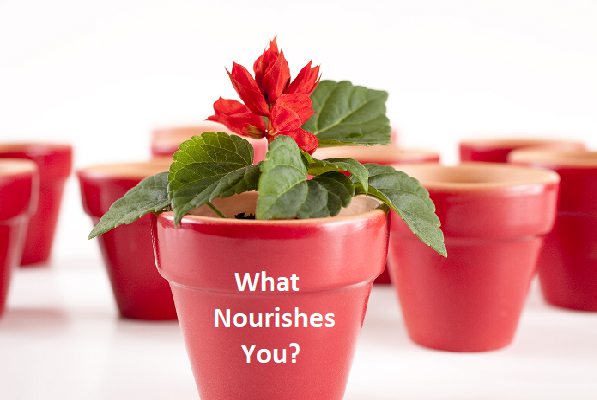
This post explores the power of three simple words: ‘What nourishes you?’ I consider these words in the context of personal reflection, to deepen connection with one’s internal motivation for self-care. I also explore them with an application of symbol cards and as a conversation opener and shifter to a topic that matters and strengthens connection.
At a recent leadership conference themed around connection, we began with a conversation around this question: What nourishes you?
These three simple words quickly bypassed the minds and engaged the hearts of the group as people pondered and shared their responses. Feedback from the group indicated that they loved the question and were delighted at how it offered a fresh internal insight and perspective, taking conversation with their partner into new terrain.
The reaction of this group was the same as that I have seen with many individual leaders and teams who are asked the same question. Which raises a red flag. Why do we not ask ourselves this question? Why do we not ask it of each other?
If we are walking and leading in life without bringing attention to what nourishes us, how can we know what form of self-care is right for us on the path towards wellbeing? How can we know what needs to change?
These three little words – ‘What nourishes you?’ – are a great place to start with your personal enquiry, bringing greater focus to your own self-care.
A case study: the horse, the ocean and the mirror
 I have been successfully using the ‘What nourishes you?’ question in different applications across a decade or more. I want to share an extended version of this application that deepens the individual’s inquiry.
During my training to become an art therapist, I worked with a 20-year-old client who had a history of anxiety and depression. She had spent many years under the care of psychologists and a psychiatrist. She wanted to try a different approach.
Through the use of symbol cards we explored ‘What nourishes you?’. Somewhat surprising to me at the time, it turned out that in over a decade or more of therapy this woman had never been asked a question filled with such possibility. Rather, she had found herself rehashing the problems of her life again and again.
“Symbols evoke profound emotions and memories, often without our making rational or conscious connections. They surround us and they help navigate through life, providing short cuts to understandings, ideas and feelings … the use of visual images can assist a client to get in touch with otherwise inaccessible personal realities” – www.innovativeresources.com
How does it work?
By asking ‘What nourishes you?’ and inviting a spontaneous selection of symbols as a response, we bypass the left logical brain (our verbal language centre) and instead access our right-brain intelligence. This is our creative side, so accessing it invites a deeper knowing – something from our unconscious self – to emerge.
I recall a beautiful moment when this young woman selected three symbol cards: the horse, the ocean and the mirror. She was still. Emotion rising. We sat there together in the magic of this moment. Something shifted within her inner experience and possibility. Life beckoned.
What began as a symbol exercise about ‘What nourishes you?’ turned into a deeper exploration and ultimately deep clarity and insight into how this young woman wanted to be in the world. Standing tall, centred and powerfully on her own feet like the horse; loving who she saw when she looked in the mirror and not shrinking when she met the world; and feeling free like she felt in the ocean.
This young lady experienced a connection with her internal navigation system and connected with how she wanted to be in the world. This was an unlocking of something previously locked so tight it was not available to her.
Application to learning and leadership development
While clearly this specific experience was within a therapeutic situation, I use symbol cards with project teams that are misaligned and off course and as a conversation starter, connector and to bypass mental chatter in leadership development. (NB. the actual question I ask will depend on the specific learning context, for example, in a recent leadership development program in which we were exploring change, the question was “What is Change?”, using the symbol cards to invite a deeper response to this question. Similarly, with project teams that are stuck – I might ask “How do you feel?”, which invites the individual’s experience of what is going right/wrong with the project to surface so that everyone’s voice is heard and the team can navigate next steps from an authentic place.)
This application of symbol cards – as an adjunct to coaching or team development – is broadly available and accessible to coaches and facilitators. I have included the link here to buy your own set of symbol cards if you feel inspired to give symbols a go.
What nourishes you? – getting started
Whether you are a coach, facilitator, leader or person wanting to build connection, I encourage you to ignite this conversation in your team, your family and as a conversation starter in any context:
- Start close in: ask yourself ‘What nourishes me?’; ‘Where is that in my life right now?’; ‘How much time and energy over the past week has been allocated for my own self-care?’; ‘What needs to change?’ Commit to one small step today that will take you a step closer on the path toward wellbeing in life and leadership.
- Ignite the conversation in your team and with the people closest to you in your life by asking the question often: ‘What nourishes you?’ or use the symbol card process to ignite another important question for example, “How do you feel”?
- Coach, therapist or facilitator? Consider incorporating symbol cards into your practice with the ‘What nourishes you?’ question and many more.
To commit to self-care is to value yourself, your relationships, your professional work. Self-care is a choice you make. It starts with you. These three little words – ‘What nourishes you?’ – are a great place to start with your personal inquiry and as a conversation opener and shifter to a topic that matters.
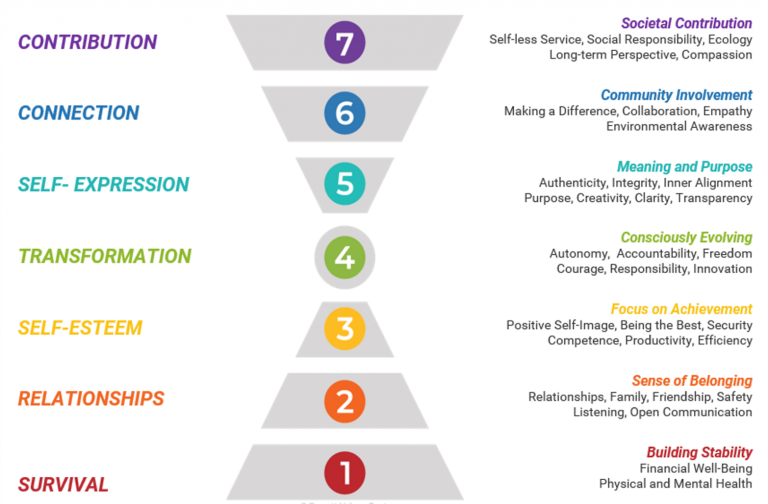
This post explores the importance of knowing and harnessing your personal values as a key navigation system in life and leadership.
Deep down inside what is important to you? What do you want your life to stand for? What sort of qualities do you want to cultivate as a person? How do you want to be in your relationship with others? What matters to you?
In every area of life we make decisions and choices based on what is important to us. This includes what we value as individuals as well as what we absorb of the spoken and unspoken expectations of the communities and organisations of which we are a part.
We are often unaware of the mix and interplay of values that motivate us to act, and that inform our decisions. In organisations, lists of values are more often statements of intent than accurate reflections of how things are really done. Even where the intent is genuine, the greater the gap between words and action the greater the perception of a lack of integrity, resulting in cynicism and disengagement.
Through the process of clarifying our core values – our heart’s deepest desires for how each of us wants to behave as a human being – and using those values to motivate, inspire and guide our ongoing actions, we grow as people and develop our capacity and capability as leaders.
Our bodies know when we act out of alignment from our values
Just as it is within a organisation, it’s critical that our actions are in concert with our core values. Aside from this being important for our integrity, often our bodies will react when we act out of alignment with our personal values. Perhaps you can recall a time when you have felt a pain in the chest or tightness in the belly in such a situation?
I recently coached a senior leader from the professional services sector with the specific brief of developing his capacity and capability to have courageous conversations. He was deeply aware that there was a conversation he needed to have with a member of his team – and should have had months ago – and that the longer he left it the more impact his lack of action was having on the broader team.
However, he felt ill equipped and fearful of having this conversation. He also felt that he was out of integrity with himself in not finding the courage to have it, and that this inner conflict was having a physical and behavioural affect on him.
Limiting values impact how we ‘show up’
As part of our coaching this leader completed a Personal Values Assessment and amongst his list of positive personal values, he had selected a limiting value of ‘being liked’. We explored this value and unpacked the impact that it was having on how he was leading his team overall and specifically with respect to this difficult conversation he had been putting off.
This leader had a good level of personal awareness and he was able to identify that his needing to ‘be liked’ probably stemmed from his childhood place in his family and the wider family dynamics. The power here was for him to see this value written on the page and to directly draw the link to see how the need to be liked was holding him back from having a difficult conversation. More broadly, this value was keeping him from becoming a better version of himself.
Through support and planning for this conversation, this leader was able to lean into his own discomfort (it hadn’t gone away – he just decided to acknowledge it and take action anyway). He had the conversation, and while it was difficult it was ultimately a great gift for both the leader and his team member.
This is an example of how when we want to change behaviour we need to look below the surface to our mindsets, beliefs and values and see what is actually driving our behaviours. From there we can create change.
This leader went a step further and embarked upon a personal values assessment for his direct reports along with a facilitated personal values learning and development session that included him sharing his own journey with the need to ‘be liked’. The group session allowed the team to began to look at the personal values they had in common as a way of building connection and focus and moving toward getting clearer on team values.
Values – based leadership keeps us centered and focused
“Values based leadership and values-based decision making allows us to throw away our rule books. When a group of people espouse an agreed set of values and understand which behaviours support those values, then you no longer need to rely on bureaucratic procedures setting out what people should or should not do in specific situations. All the rules reduce to one—live the values. People can work out for themselves what they need to do, and in so doing become responsible and accountable for their behaviours.” – Richard Barrett
The benefits of becoming a values-driven leader are:
- Leaders become conscious about what drives their decision making and can move towards values-based decision making – a key step in authentic leadership as it transcends personal beliefs.
- Leaders better understand who they are and what’s important to them and why they are motivated or inspired by some things and challenged by others.
- Leaders better understand their people and can design for and create a workplace that maximises engagement and fulfilment.
- Values provide a compass for leaders: a reference point to inform direction, guide how they engage and inspire their teams and how and why they make certain decisions.
Source: Adapted from work of Richard Barrett, Barrett Values Centre
Values have significant power to unite and energise people. Shared values can connect, where race, religion, politics and gender can divide. Becoming a values-driven leader means understanding what is important to you personally and collectively and being committed to acting on those values.
Interested in leveraging values to ignite growth in your organisation? At Evolving Leaders, we support you to unlock the power of values using the Barrett Values Centre Cultural Transformation Tools (CTT) to measure leadership and team values and culture through:
1. Executive Coaching: Leadership Values Assessment and Development
2. Team Culture Assessment and Development: measuring and managing your team’s culture using the Cultural Transformation Tools to surface the invisible factors driving performance and engagement to grow a psychologically safe team culture and strengthen team performance.

This article explores the (not-well-understood) fact that twenty percent of the population have a high sensitivity personality trait. It invites a call to action for leaders and diversity and inclusion practitioners to get on-board with this, and to help these people better understand themselves and to work alongside them to make changes to the work environment to serve individual well-being and to harness this untapped potential.
Last year I ran a particularly engaging and heart-opening workshop as part of a company’s diversity strategy. The workshop turned what was normally a very dour, windowless boardroom into a place infused with energy.
At the end of the day, after all the participants had left, I was still on a high from the experience when the managing director (who was very supportive of our work) popped into the room. He asked how the session went and I shared the excitement and outcomes of the day. I then said to him, ‘Can you feel the energy in the room?’
He looked at me with deep respect (knowing that I could in fact feel the energy in the room) and said, ‘No, Nicola. I can’t feel the energy in the room.’
We both paused and smiled. It was a moment of acknowledging diversity, in the true spirit of the workshop that had been just been held.
That day was a reminder for me of a gift that I have come to take for granted given that I live with it every day. The gift relates to my high sensitivity, which gives me access into so much of what remains invisible to many others.
I had long recognised my high sensitivity but didn’t really give it a name until I came across a book titled The Highly Sensitive Person by clinical psychologist and researcher Elaine N. Aron. My discovery of this book was one of those life changing moments. Reading it helped me to own more of who I am and to stand taller in the world, recognising that my need for self-care – including having time and space alone and avoiding caffeine (one coffee keeps me awake for 24 hours) – is as essential to me as eating, sleeping, and breathing.
20 per cent of the population are born with a highly sensitive personality trait
Highly sensitive herself, Elaine Aron has done years of research and has discovered that ‘sensory processing sensitivity’ is a personality trait that 15 to 20 per cent of the population are born with. Twenty per cent! This means that up to one fifth of the population (and therefore the workforce) has this gift.
What are the traits of a highly sensitive person?
Biologically, highly sensitive people (HSPs) are different to the rest of the population. Their minds work differently. HSPs react more to stimulation: they notice levels of stimulation that go unnoticed by others. They are more easily overwhelmed, need more down time and more time alone and are prone to illness when they ignore their HSP trait.
A common misunderstanding is that HSPs are all introverts, where in fact 30 per cent of all HSPs are extraverts. HSPs have access to what is known as the ‘sixth sense’, which gives access to intuition where they just ‘know’ what a particular outcome of a situation will be ahead of time. They will often know intuitively what decision to make without the need to process it logically or rationally.
Aron uses the acronym DOES to summarise the key facets of this trait:
D: depth of processing – a fundamental characteristic is that HSPs observe and reflect before they act.
“Like those machines that grade fruit by size, we (HSPs) sort the fruit into 10 sizes while others sort it into 2 or 3.” (page 7)
O: easily over stimulated – if you are going to pay more attention to everything, you are bound to tire sooner. Moderate arousal for the rest of the population equals high arousal for a HSP. High arousal for the rest of the population equates to overwhelm and can cause shut down for a highly sensitive person.
E: giving emphasis to our emotional reactions and having strong empathy which, amongst other things, helps us to connect with others, to notice and to learn.
S: sensitive to all the subtleties around them which is often what it most apparent to the HSP – the little things they notice that other miss.
Wondering if you are HSP?
You can do a self-test on Aron’s website based on her work. It will indicate whether you may have the high sensitivity trait. If you find that you could be, I would encourage you to reach out and get the support of a coach or therapist if you feel that would help you to integrate your new insights about yourself.
My intention for sharing
I wanted to share this brilliant work in the hope that if you too feel that you are different (in this highly sensitive way) to many of the people around you, that by understanding this trait you can more fully appreciate yourself. Celebrate your gifts and give yourself the self-care that you need to flourish. Read more about this trait and begin to help others to understand and appreciate your sensitivities. If you are a leader, parent, spouse, or friend of someone who is highly sensitive, the resources can be tools for you too, helping you to start a different conversation and to invite a new level of appreciation and respect.
The implications for diversity and inclusion, leadership and organisations
Aron’s work has got me thinking about HSPs and the need for organisations to bring focus to this area as part of their diversity and inclusion agenda. This is clearly a diversity and inclusion issue and an opportunity for leaders to bring to the surface the gifts and needs of this currently unidentified group of people that make up 20 per cent of the population.
>>>>>>>>>>>>>>>>>>>>>>>>>>>>>>>>>>>>>>>>>>>>>>>>>>>>>>>>>>>>>>>>>>>>>>>>>>>>>>>>>>
Interested in a presentation on this topic for leaders in your organisation? Contact Nicola

There was a period in my life when I found myself in a state of overwhelm – the type of overwhelm that everyone else can see except the person being overwhelmed (i.e. myself). I wouldn’t recognise it until some time later. During this time, a leadership coach introduced me to the concept of ‘mental real estate’. It was a classic ‘light bulb’ moment.
Our mental real estate is the capacity we have to hold onto, manage and navigate everything in our lives. Our work, our relationships, our family. Our day-to-day responsibilities in the many roles that each of us have: leader, partner, parent, sibling, child, friend, colleague etc. Perhaps our community work or volunteer work at school or elsewhere.
Mental real estate is not an infinite resource
The thing about mental real estate is that it’s not an infinite resource. The amount each of us has is finite.
Just like ‘real’ real estate, mental real estate has boundaries that can’t be expanded. The more we commit to extra things in our lives – the more we say ‘yes’ to every request or offer – the more our mind starts to push up against those boundaries.
Eventually it becomes like overpacking a suitcase and then still trying to get more in: something has to give. This is where we are over committed.
The impact of this situation will be familiar to many leaders and other busy people. We start to lose focus on the things that really matter to us. We get locked into ‘thinking and doing’; we lose the ability to ‘feel and be’. We become overwhelmed, as I was. Stuck on a treadmill, we become overly stressed – certainly stressed beyond a healthy level – and start making poor decisions. This diminishes our wellbeing and starts to affect our happiness, relationships and overall performance.
It’s important to realise that, just like the real estate we live in, a lot of what is crowding our minds in these situations is clutter we don’t really need. As many as 80 per cent of the thoughts we have each day can be unhelpful in the sense that they aren’t moving us toward the life we want to lead. All this mental clutter gets in the way of our ability to thinking clearly and making good decisions and can lead to unnecessary overwhelm. Reserving as much mental real estate as you can for the stuff that actually matters is the key here.
Take a moment to reflect on your own mental real estate
I invite you to take a moment to reflect on the three things that matter most to you in your life: the things that make you feel full, happy and satisfied.
Now ‘zoom out’ to take in everything that you have on your plate right now. All the tasks and roles that you are (or feel) responsible for right now.
Is there an alignment? Is the stuff that is keeping you busy, and therefore occupying most of your mental real estate, contributing to those things that are most important to you? Are you making a concerted effort to ensure that some of your mental real estate is reserved for those important aspects of your life?
Or is this exercise simply too hard due to your mental real estate being overcrowded?
What do you notice?
Does something need to change?
When I did this exercise some years back, I noticed that I the things that my focus was definitely no on those things that mattered the most to me. They were struggling for a place in my mental real estate, and as a result I had little clarity of thought and was making poor decisions. To help get me back on track, I called upon a personal values assessment.
Taking the time to explore your personal values and beliefs is a great way to get started on an ‘audit’ of your mental real estate. This process can guide you back to what is most important to you, and from that place you will be better equipped to make conscious choices about what needs to be let go of to clear a bit of space in your mental real estate.
You also might like to consider the completion of a Global Leadership Wellbeing Survey (GLWS). This survey will help you understand your state of wellbeing at work and at home. It will help check in on your available mental real estate. The survey is supported through a debrief and development conversation to help you ‘tidy up’ your mental real estate, establish a sustainable self-care rhythm and show up as a better version of you.
Our mental real estate is a precious commodity. Do what you can to keep yours tidy, ordered and not too cluttered.